Sound-Based Learning Zone

British Language Lab In A.S. Rao Nagar For Phonics, Rhymes, And Confident Speaking

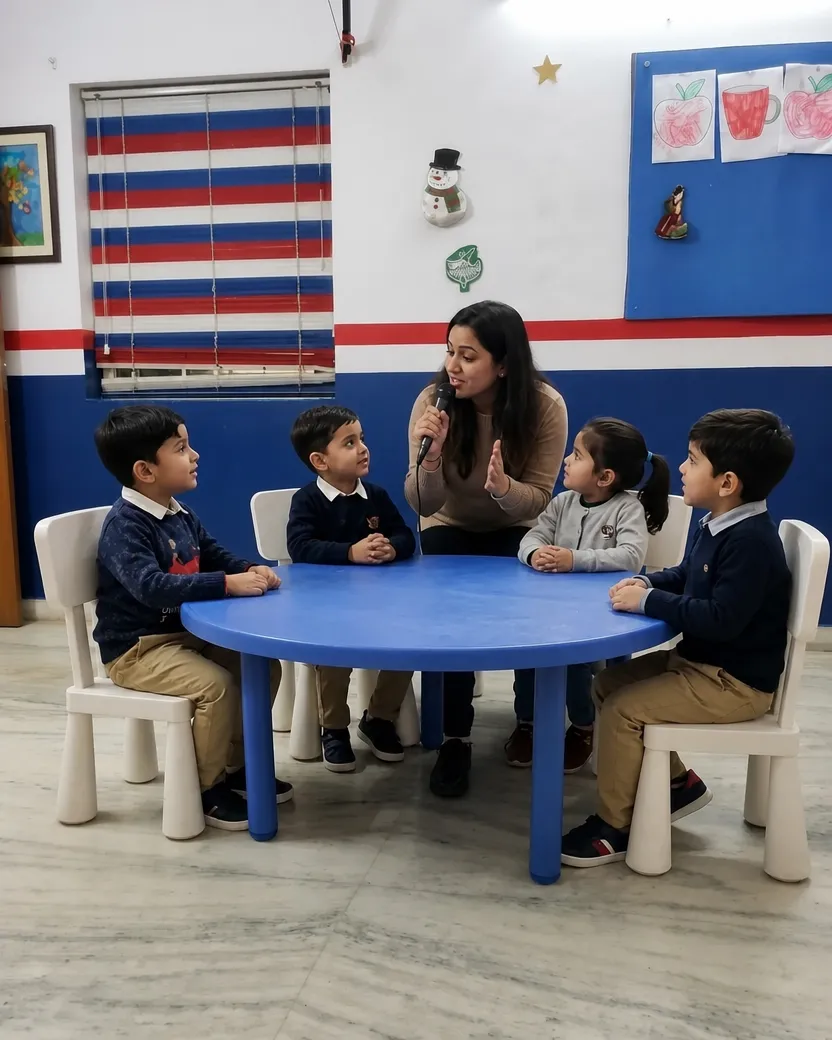
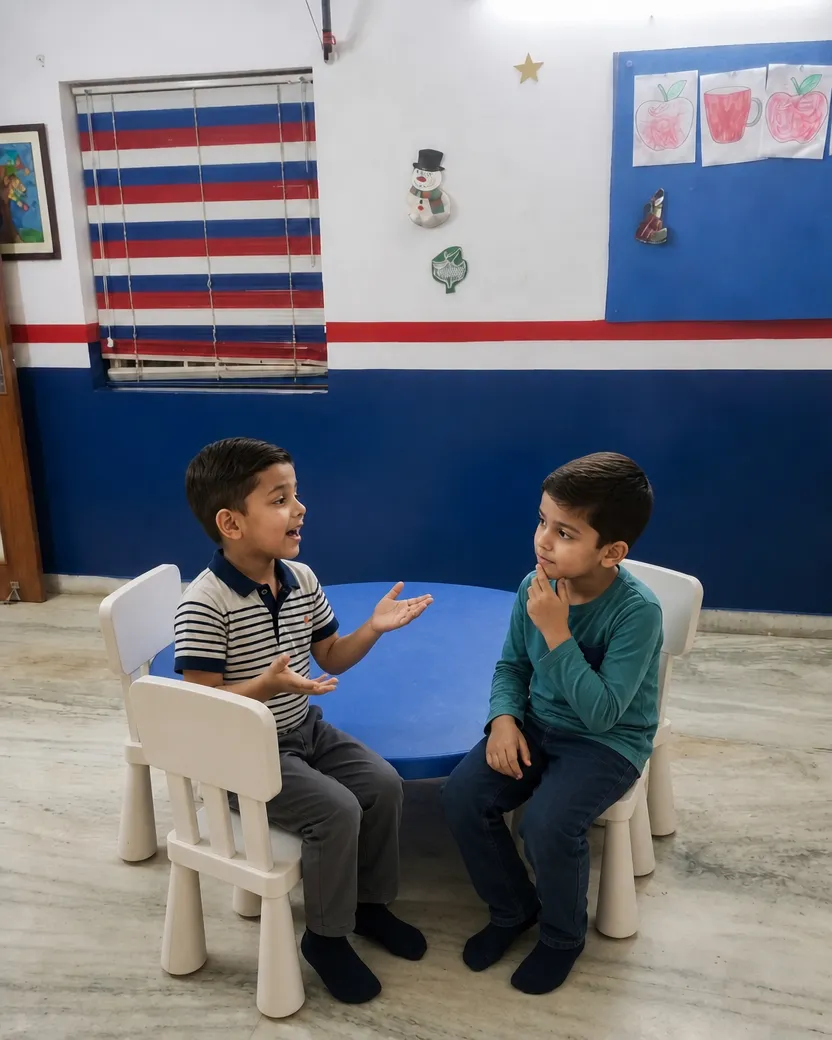
At Rocksfordz Kids in A. S. Rao Nagar, English learning is not screen-based. There is no TV in the British Language Lab and Sound Room. Instead, children learn through sound, music, rhymes, phonics, teacher voice, listening, repetition, and guided speaking.

‍

‍

‍

Agility 1
8:30 AM to 8:30 PM
Agility 1
1 : 6 Adult Child Ratio
Agility 1
No Screens. Just Smiles
Enquire / Book a Free Trial
By clicking, you're confirming that you agree with our Terms and Conditions.
Thank you! Your submission has been received!
Oops! Something went wrong while submitting the form.
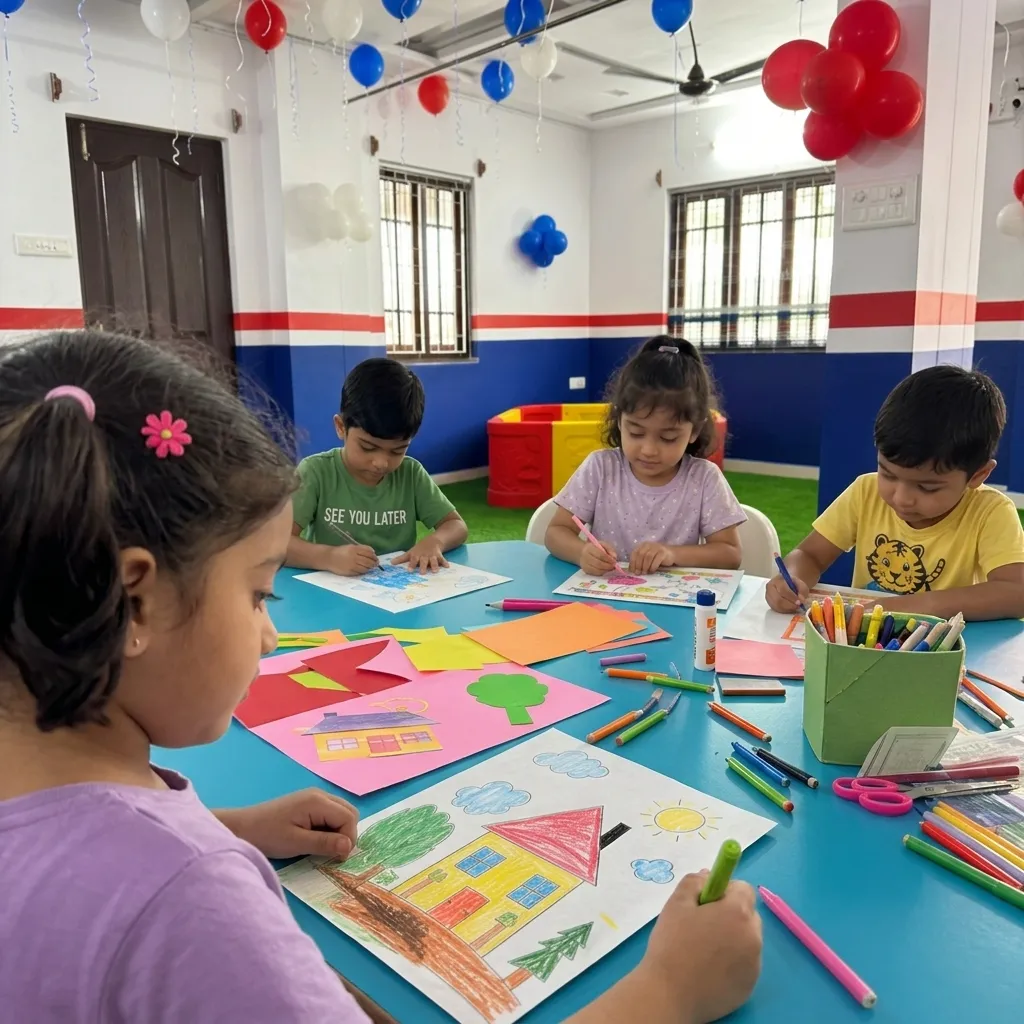
Preschool children exploring design thinking through creative activities

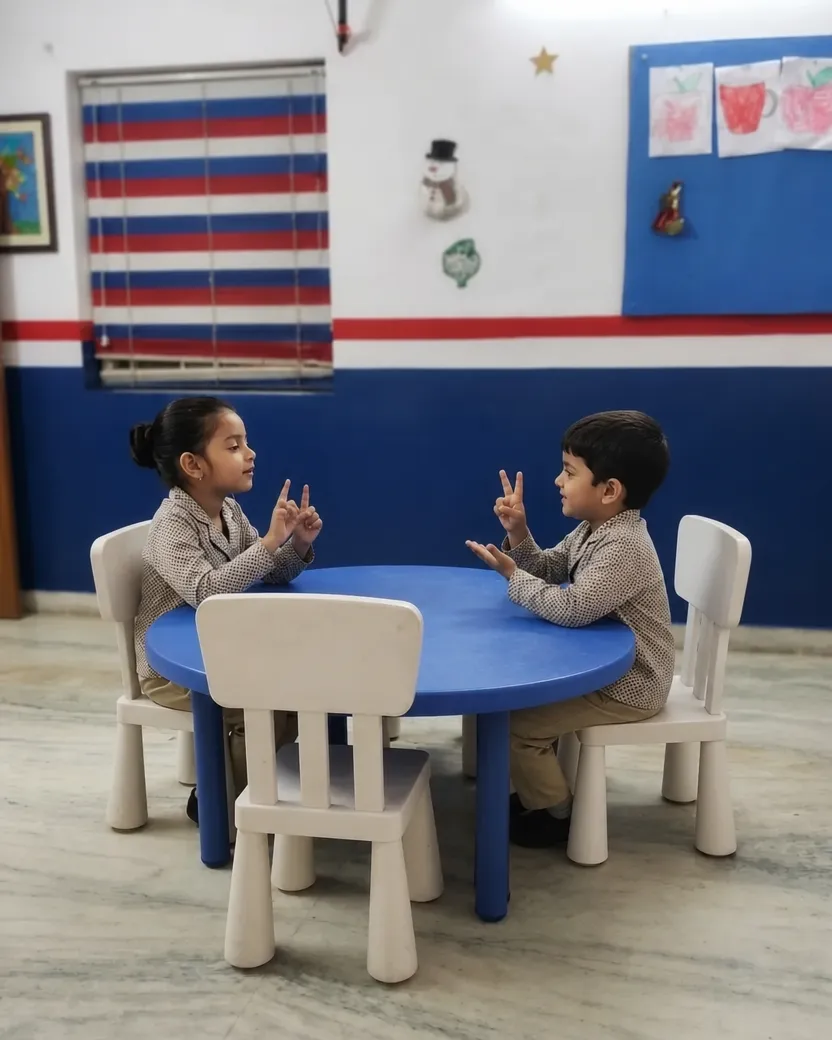
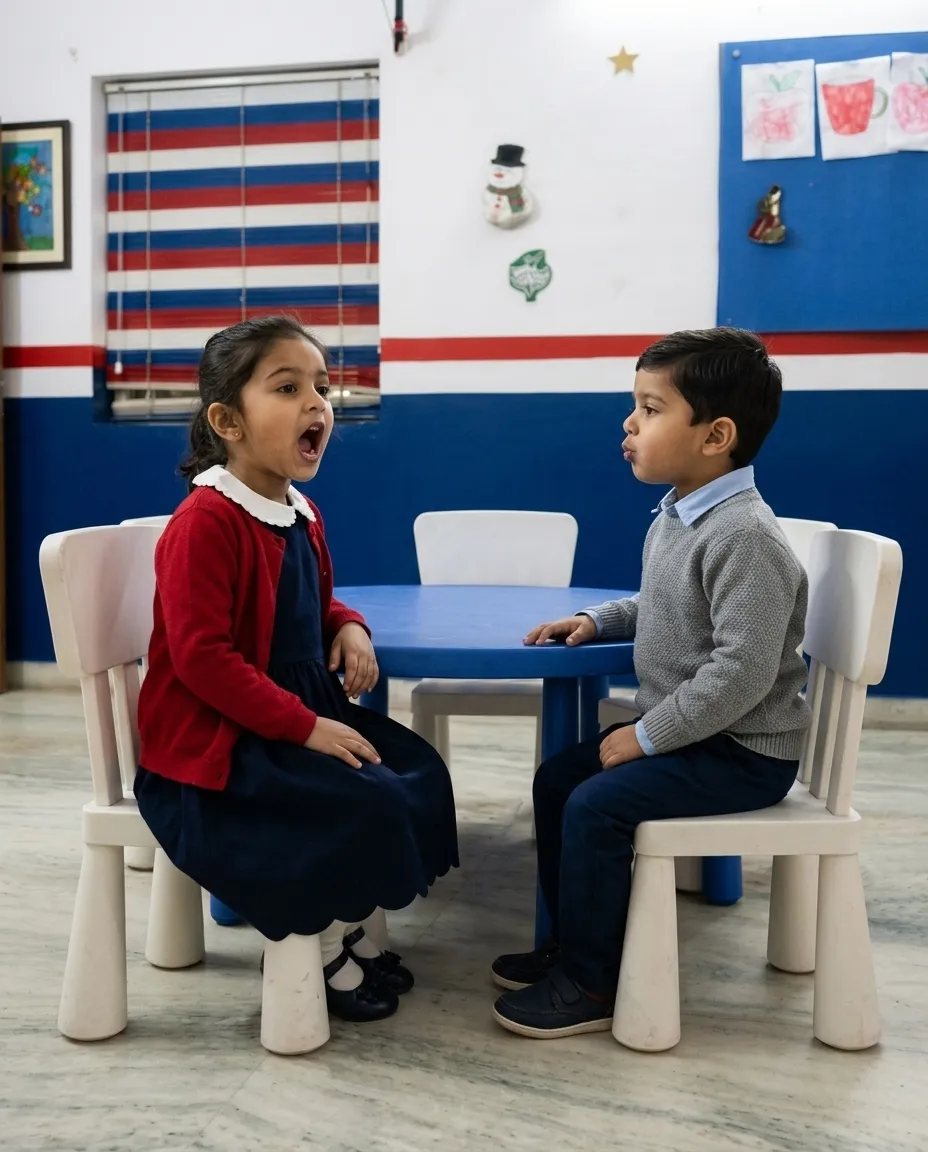
The idea is simple and powerful: monkey hear, monkey repeat — and language improves. Young children absorb language naturally when they hear clear sounds repeatedly and get chances to repeat them in a warm, encouraging space. The British Language Lab helps children develop pronunciation, listening, vocabulary, rhythm, confidence, and early communication through a gadget-free, sound-rich environment.

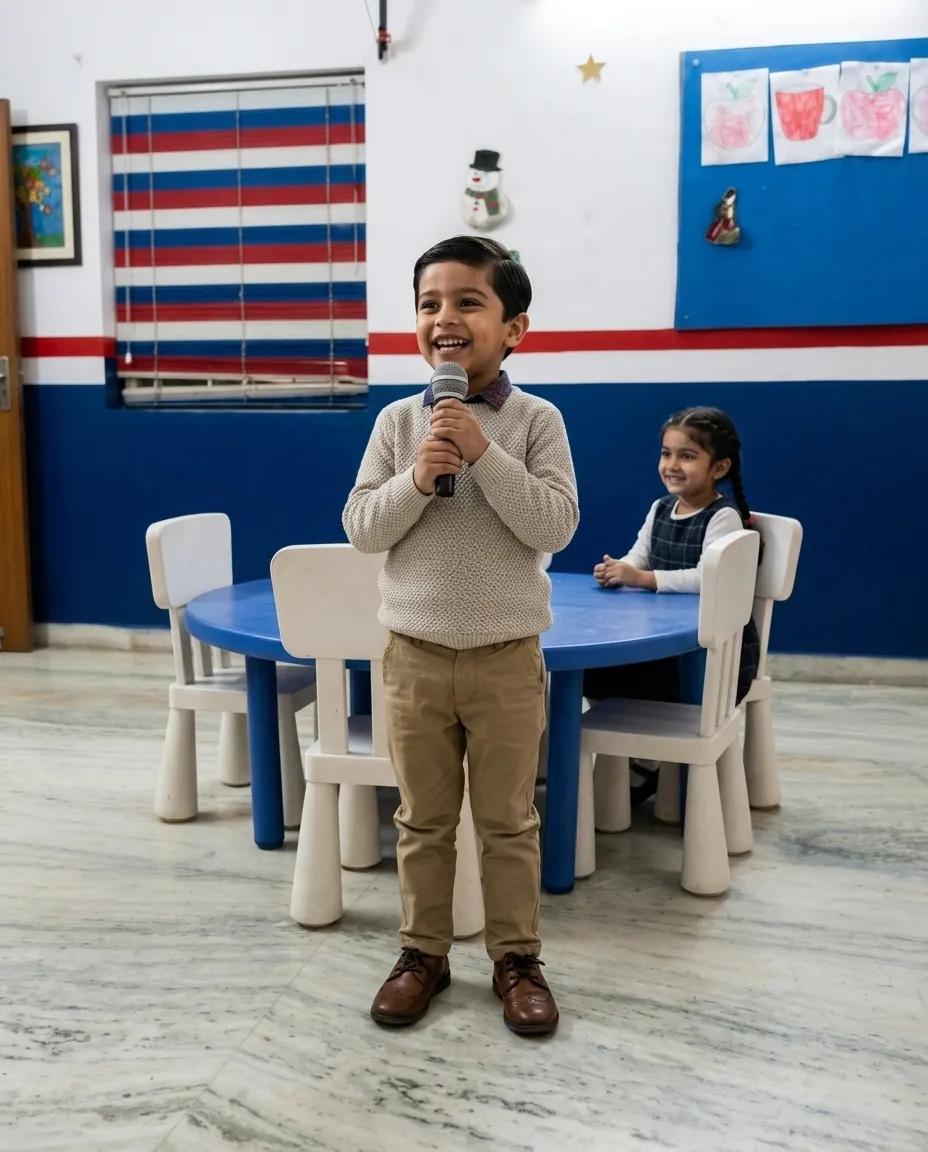
For older children, the Language Lab becomes a boon because they can practise language skills one-to-one and build stronger spoken English confidence.

‍

‍

‍

‍

Why A Sound-Based Language Lab Matters

Many children hear English through cartoons, videos, or mixed audio from screens. That may entertain them, but it does not always build clear speech, confident expression, or correct phonics. Rocksfordz takes a different approach. The British Language Lab uses sound, rhymes, music, repetition, and teacher-led speaking instead of visual screen dependence.

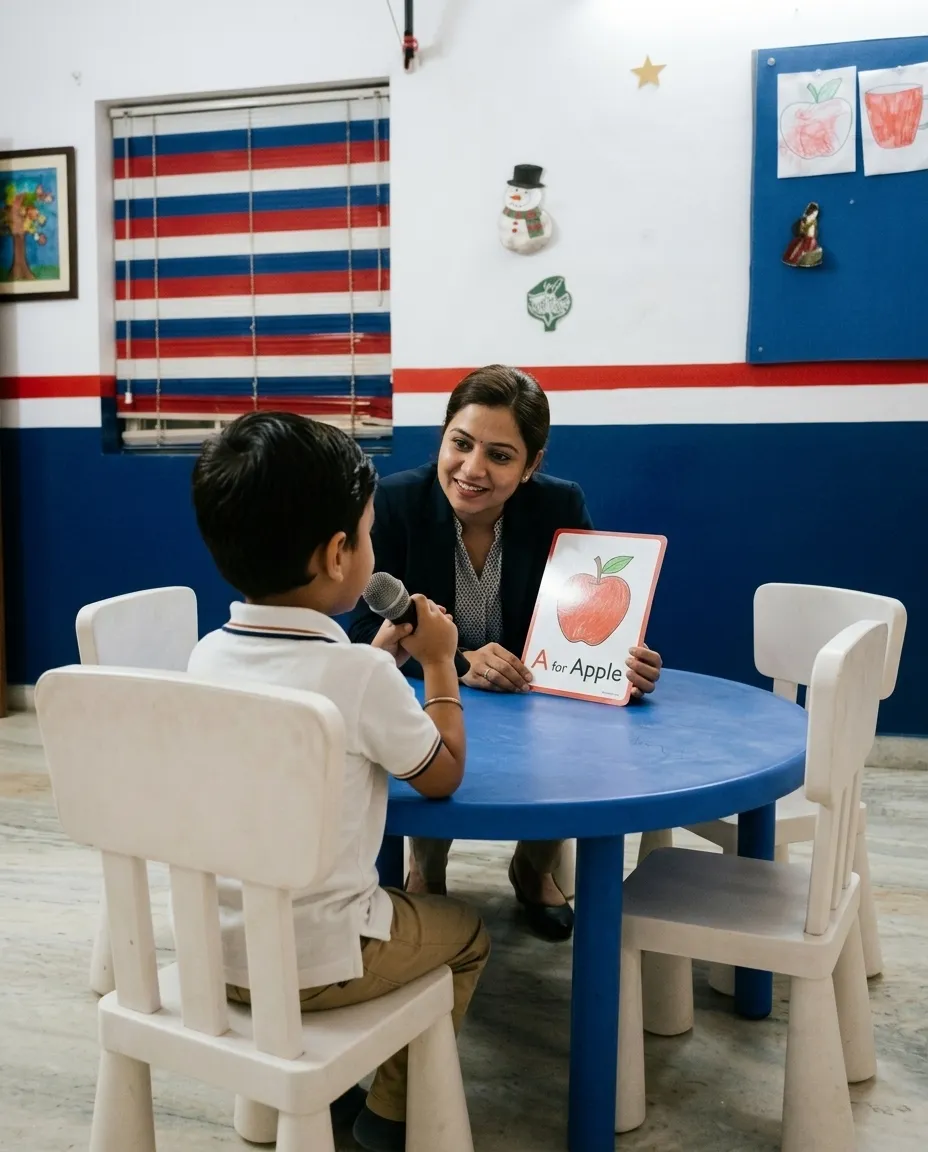
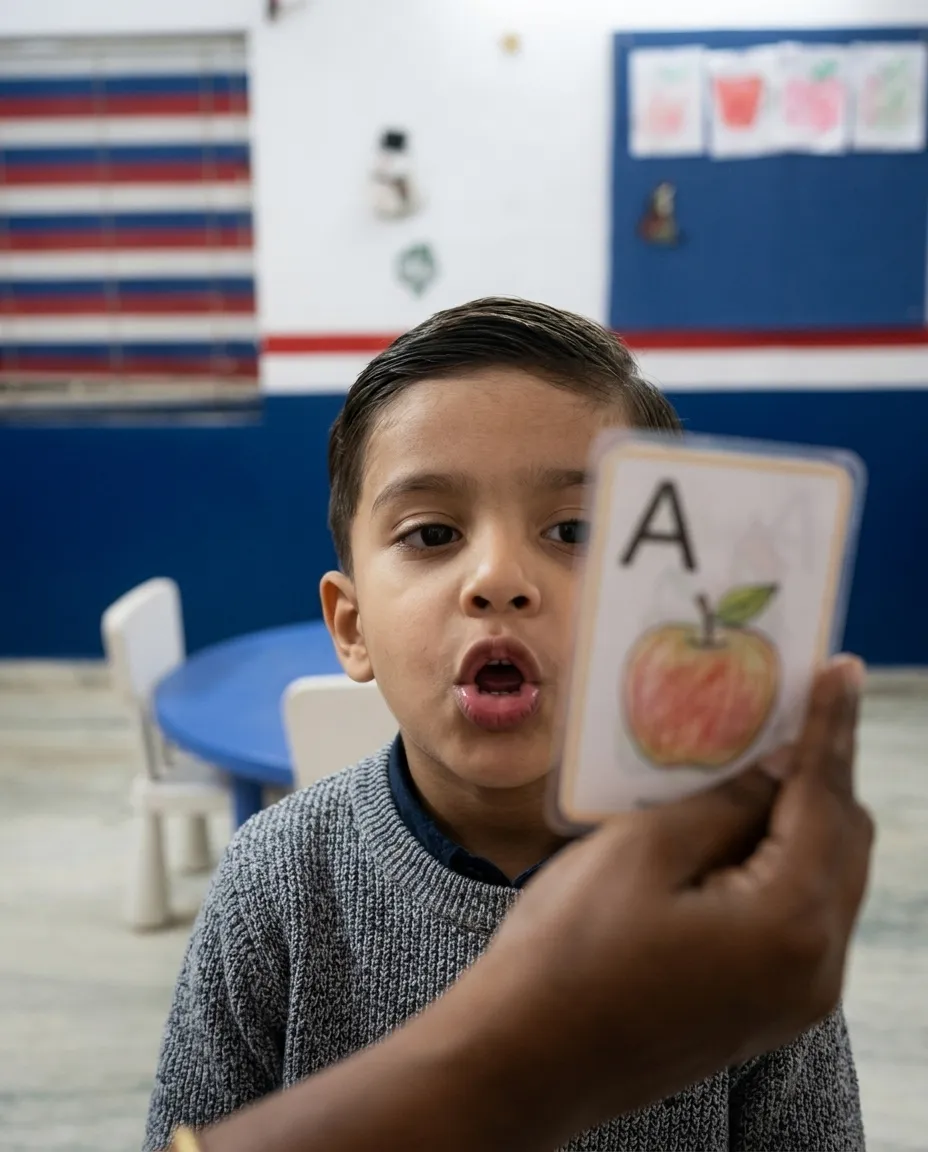
For preschool children, this means phonics is introduced naturally through listening and repeating. Children hear sounds, say sounds, sing sounds, connect sounds with words, and slowly become more comfortable with English. They do not feel tested or judged. They simply participate.

For parents, this matters because good English confidence is one of the strongest school-readiness goals. They want children to speak clearly, listen better, pronounce better, and feel confident answering teachers or speaking with friends.

‍

‍

How Children Use The British Language Lab And Sound Room

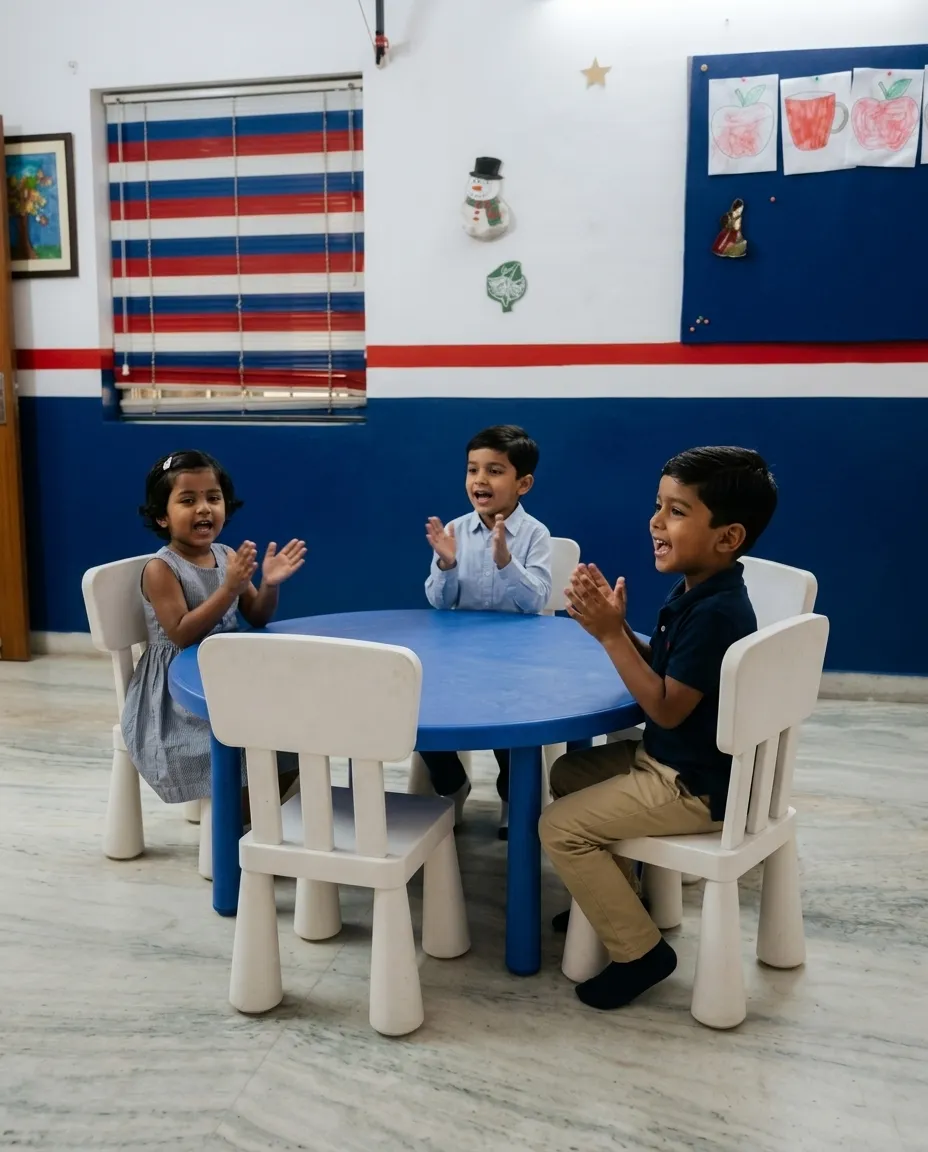
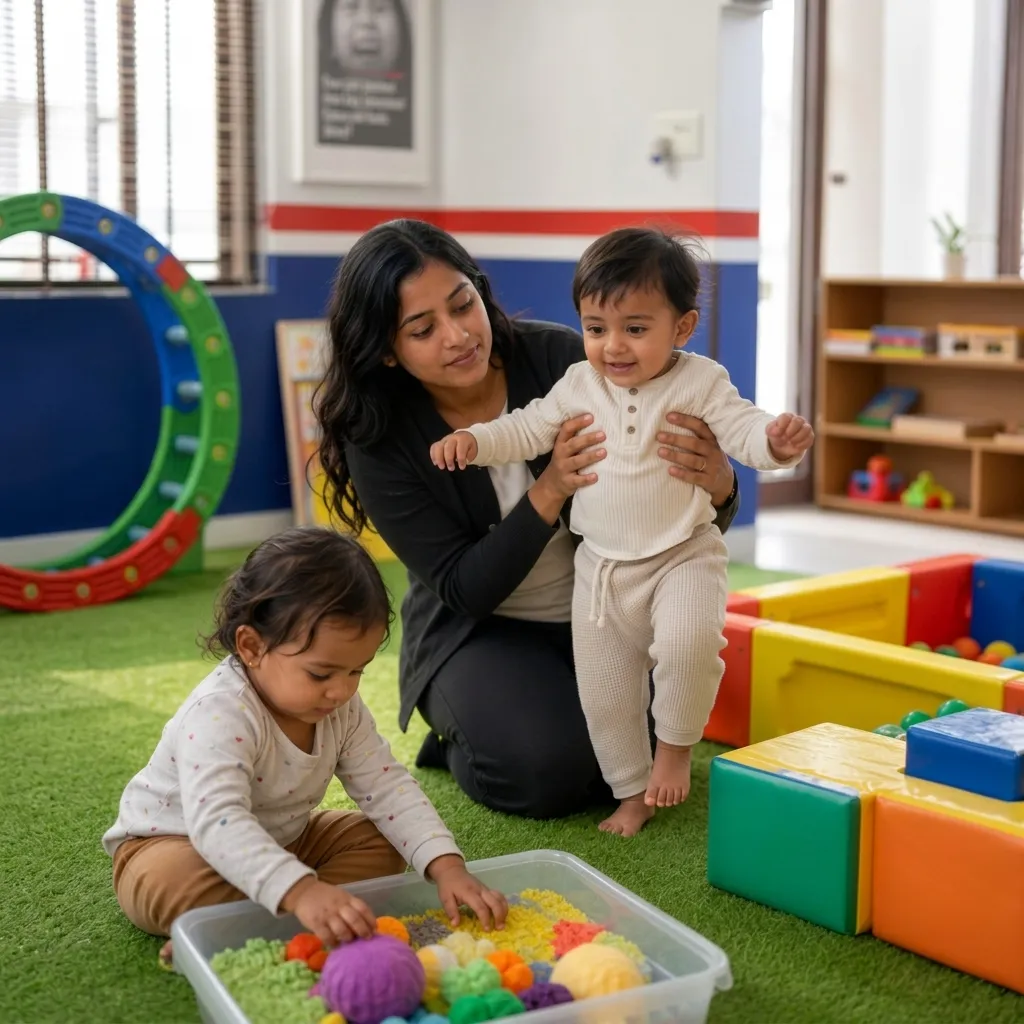
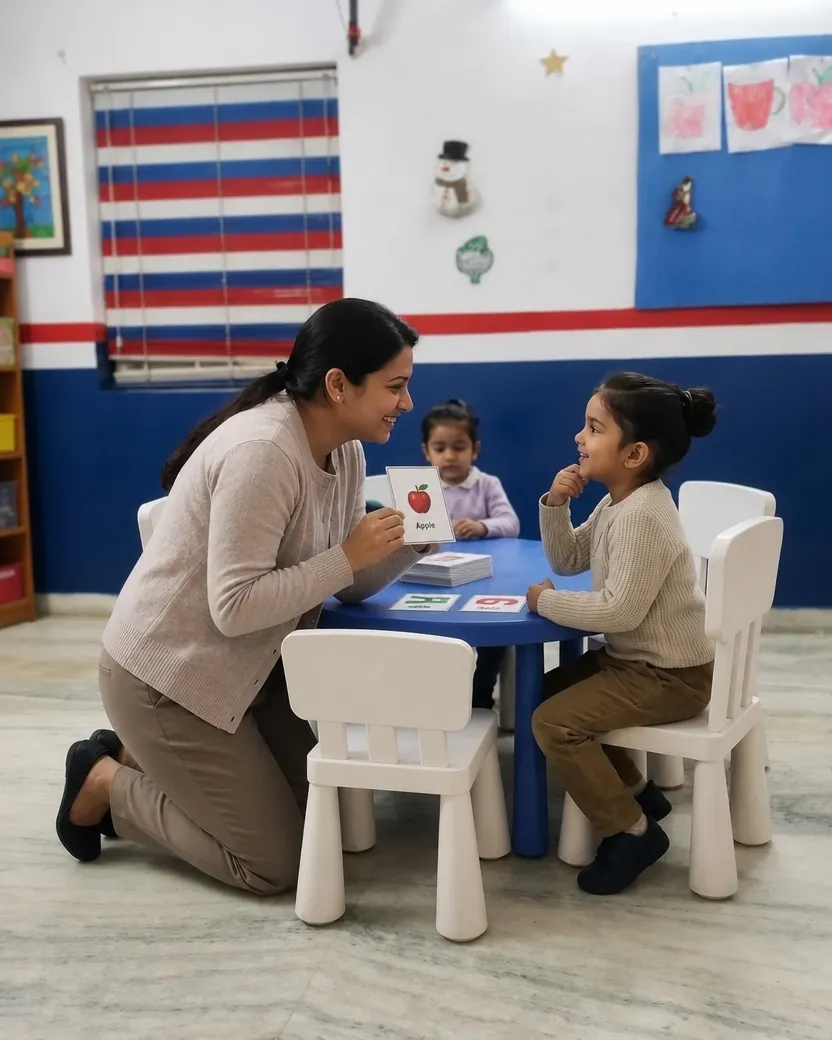
Children use the lab differently at each stage. Babies and toddlers hear rhymes, music, gentle sounds, and caregiver speech. Playgroup children repeat simple words, sounds, rhymes, and action songs. Nursery children practise phonics, vocabulary, picture words, and short speaking turns. Kindergarten children build stronger phonics, pronunciation, sentence patterns, listening, and speaking confidence.

The Sound Room makes learning multisensory without screens. Children listen, repeat, clap, sing, move, respond, and speak. Teachers can use rhythm, music, rhyme, storytelling, and repetition to help children internalise language. Because there is no TV, children are not passively watching. They are actively hearing and speaking.

For after-school children, the lab can support one-to-one language practice, spoken English correction, reading aloud, pronunciation improvement, vocabulary building, and confidence in communication.

‍

‍

‍

‍

‍

‍

What Children Learn In This Zone

Child with a backpack having their forehead temperature checked with a handheld infrared thermometer.

British phonics:

Children hear and repeat clear sounds, helping them build early reading, pronunciation, and word recognition foundations.

Child with a backpack having their forehead temperature checked with a handheld infrared thermometer.

Listening skills:

Rhymes, sounds, songs, and teacher-led activities train children to listen carefully and respond.

Child with a backpack having their forehead temperature checked with a handheld infrared thermometer.

Pronunciation:

Repeated sound practice helps children say words more clearly and confidently.

Child with a backpack having their forehead temperature checked with a handheld infrared thermometer.

Vocabulary:

Children learn new words through rhymes, stories, music, picture prompts, and guided speaking.

Child with a backpack having their forehead temperature checked with a handheld infrared thermometer.

Speaking confidence:

Children practise short responses, repetition, rhymes, songs, and one-to-one speaking without pressure.

Child with a backpack having their forehead temperature checked with a handheld infrared thermometer.

Screen-free language learning:

Children learn through sound and interaction, not TV, cartoons, tablets, or passive videos.

Connected Programs At Rocksfordz

Child with a backpack having their forehead temperature checked with a handheld infrared thermometer.

Preschool

For preschool children, the gardening zone makes learning active and joyful. It supports early science, language, patience, responsibility, and nature connection.

Child with a backpack having their forehead temperature checked with a handheld infrared thermometer.

Daycare

For daycare children, gardening becomes a calming, meaningful part of the day. It gives them fresh air, sensory input, movement, and peaceful engagement.

Child with a backpack having their forehead temperature checked with a handheld infrared thermometer.

Daycare For Babies

For babies and toddlers, this zone can be introduced gently through supervised sensory exposure: touching leaves, seeing plants, hearing nature words, and observing colours.

Child with a backpack having their forehead temperature checked with a handheld infrared thermometer.

Playgroup

For 2 to 3 year olds, gardening builds first-school comfort. Children touch, pour, name, observe, and participate without academic pressure.

Child with a backpack having their forehead temperature checked with a handheld infrared thermometer.

Nursery

For 3 to 4 year olds, gardening builds routine, vocabulary, patience, responsibility, and early environmental awareness.

Child with a backpack having their forehead temperature checked with a handheld infrared thermometer.

Kindergarten

For 4 to 5 year olds, gardening supports sequencing, observation, early science, storytelling, responsibility, and school-readiness confidence.

Child with a backpack having their forehead temperature checked with a handheld infrared thermometer.

After School

For older children, the gardening zone can support nature journaling, responsibility projects, observation, sustainability conversations, and screen-free decompression after school.

Why Parents In A. S. Rao Nagar Value This Zone

Parents often worry that children are becoming physically inactive because of screens, long school hours, and indoor routines. The Dance and Yoga Studio gives children a safe, joyful, structured way to move every day.

It is especially valuable because it is not just a “dance class.” It combines dance, movement, yoga, mirrors, Dice Yoga, padded flooring, rhythm, breathing, and teacher-led encouragement. Children build physical strength and emotional confidence together.

The large mirrors make the experience exciting. Children enjoy watching themselves move, which builds self-awareness and expression. The green grass-style padded flooring makes the room feel playful, fresh, and child-friendly.

This is the kind of activity zone that helps children become active, confident, expressive, and focused — without gadgets.

‍

‍

‍

‍

Schedule a Visit

Areas We Serve Near A. S. Rao Nagar

Rocksfordz Kids is located in A. S. Rao Nagar, Secunderabad, and serves parents looking for preschool, daycare, baby daycare, playgroup, nursery, kindergarten, and after-school learning near:
A. S. Rao Nagar | 500062
Jai Jawan Colony | 500062
Kamala Nagar / ECIL Area | 500062
ECIL | 500062
Kapra | 500062
Kushaiguda | 500062
Sainikpuri | 500094
Neredmet | 500056
Yapral | 500087
Radhika / ECIL Area | 500062

Social Proof:

Rocksfordz is one of the most visible preschool and childcare communities in the A. S. Rao Nagar area, with brand-provided proof of:
5,000+
Instagram followers
34,000+
Facebook followers
125+
Google reviews

Visit The British Language Lab At Rocksfordz Kids

Give your child a no-TV language space where sound, rhymes, music, British phonics, repetition, and speaking confidence come alive.

Frequently Asked Questions

Find clear answers about our unique learning zone and approach.
What is the British Language Lab at Rocksfordz Kids?

It is a no-TV, sound-based language zone where children learn through music, rhymes, British phonics, listening, repetition, and guided speaking.

‍

Is there a TV in the Language Lab?

No. The lab uses sound, music, rhymes, teacher voice, and speaking practice instead of television or screen-based learning.

‍

How does “monkey hear, monkey repeat” help language?

Young children improve language by hearing clear sounds repeatedly and repeating them in a warm, guided environment.

‍

Does this help with British phonics?

Yes. Children hear and practise phonics sounds, pronunciation, rhymes, vocabulary, and early reading-readiness skills.

‍

Is the Language Lab useful for Playgroup children?

Yes. Playgroup children benefit from rhymes, simple words, sounds, repetition, action songs, and early speaking comfort.

‍

How does it help Nursery and Kindergarten children?

It supports phonics, pronunciation, vocabulary, sentence patterns, listening, speaking confidence, and school-readiness communication.
‍

Can after-school children use the Language Lab?

Yes. Older children can practise spoken English, reading aloud, pronunciation, vocabulary, and one-to-one communication skills.

‍

Visit Our Experience Centre

Whatsapp icon

WhatsApp

Having any queries?
Feel free to chat with us:

Chat Now

Phone

We’re happy to talk and help you anytime.

+91-96038 18000

Full Address

HIG-A-40, Dr. AS Rao Nagar Rd, ECIL, Gokul Nagar, Post, Secunderabad, Telangana , India 500062